By Thessy Mehrain
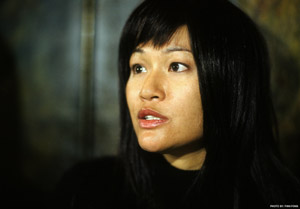
Tracy Quan (Photo by Finn Fons)
Author Tracy Quan discusses her semi-autobiographical novel, “Diary of a Manhattan Call Girl” (Three Rivers Press) and the rationale behind her decision to become a prostitute ”” and secretly, a writer. Known for her contribution to the increasingly popular “chick lit” genre, Ms. Quan’s rise to fame began when her fictional series on prostitution were published on Salon.com. The series revolves around a character named Nancy Chan, who struggles to keep the two halves of her double life in New York City separate from one another.
Tracy, the protagonist of your novel ”” the character of Nancy Chan ”” is based on your life. At what point did you first think about sharing your story? Who do you see as your audience, and what is your message?
At 13, I had this vague ambition to write a novel ”” but not about sex. At that point, I didn’t have much of a story to tell. I was starting to have a sex life and I also thought I would become a prostitute one day, but I saw writing and sex as two unrelated activities. I didn’t realize that I would one day write something inspired by my own sexual observations.
I don’t have one message to convey because it changes from one project to the next. How my life got reinterpreted in this novel is a mystery, sometimes even to myself, so I think it’s too narrow to say that Nancy’s character is based on my life.
My readers don’t fit a mold. Some are relaxing, escaping from their daily toil. I’m not ashamed to say that the book is successful at airports. Some are students in philosophy or women’s studies, where sex work is getting a lot of attention. I don’t have a target audience in mind. When I began writing my novel, I was told that I had a mostly female readership, but I know that my work appeals to men and women. I have transgender readers, too. We are hearing lately that chick lit needs to evolve ”” and some women tell me that this is “street smart chick lit,” but that is really for the reader to judge.
In your story, Nancy Chan has an unsuspecting boyfriend and lives a double life. The societal stigma surrounding this line of work, forcing sex workers into lying and therefore denying who they are, seems to be a disadvantage of a call girl’s job. Nancy Chan handles it pretty well, though. What do you see as the pros and cons? Is it a job and a lifestyle you would recommend? In your opinion, is being a call girl a profession like any other?
Nancy does lie to her boyfriend, but I don’t think stigmatization tells the whole story. Women have complex, egotistical reasons for lying to their men. Women have been lying to men for centuries and Nancy is part of that tradition. Until DNA testing was invented, women could more easily lie about paternity. Nancy lies because she wants her boyfriend to treat her a certain way. She wants a conventional romance. When people lie to a partner, it’s because of how they think they will be treated. People lie to carve out privacy, to make someone happy, to maintain an upper hand. Prostitutes often lie to their boyfriends but so do many other people. Now, some people assume that there is an authentic self, a person you “truly are,” hiding behind the public image. I think that’s naïve. You can minimize one aspect of yourself in order to play up another.
Pros and cons? If you are a prostitute, you learn to be versatile. But if you are too versatile and you get found out, you may be accused of dishonesty or moral turpitude.
There is NO job or lifestyle I recommend because every path involves risk or pain, but there will always be people who are attracted to the prostitute’s way of life, whether you condone or discourage [it]. The call girl is like other people but she is also in a category of her own. Aren’t all professions a bit distinct or different?
I agree. All professions are different, though there aren’t too many jobs that people feel they have to lie about ”” like Nancy, who tells people that she does “copy editing” for a living.
Many jobs do require confidentiality, though. The denial that hookers practice can be viewed as a form of confidentiality. If you run into a client at a party and you say hello, it’s a lot safer when the world doesn’t know you are a hooker! If the world knows, he will run to another corner of the room. And everybody will look at him oddly.
I used to hide my profession when I was hanging out with another call girl. I would go undercover with her friends, even though I was being very open with mine. This is a valuable skill. Information is a resource. What you do with it says a lot about your intelligence, integrity and agility. It’s more important to be trustworthy than to be honest.
And writers can lead double lives, far more than people realize. There is a wonderful story by Somerset Maugham: “The Colonel’s Lady.” The colonel’s wife writes and publishes a collection of poetry right under his nose without telling him. The poems are based on her secret romantic life.
For you, personally, how did the aspect of keeping a double life affect your relationship to friends, family and lover?
I mostly led a very open life. When I did choose to keep things a secret, I rather enjoyed it. I enjoyed the intrigue ”” having my privacy. It made me feel more in control of my life and gave me freedom. I used to argue with my friends in “The Life,” as we called the profession. They would always tell me that they preferred having a double life. I thought they were crazy. When I finally had a reason to play that game, I saw why they enjoyed it. I don’t regret telling [my boyfriends and family] the facts”¦.And I also don’t regret hiding it from others. It’s about striking a balance ”” doing what works for the moment. So I had a boyfriend who knew, but when I went to parties with his uptight corporate friends, they did not know. For a long time, my family didn’t realize I was writing a column at Salon.com. But they knew I had been a hooker. My writing was more of a secret than my sex work!
Did it change over the years? Obviously, writing the book is also a “coming out” of sorts.
Not as much as you might think. My parents have known about my sex work for years. Even when I hid the details, they knew I had friends who were hookers. But I was nervous about coming out as a writer ”” my friends in the sex trade did not always know I was writing. I was worried because I thought they would dislike the book or disagree with my choice. I was worried that my hooker friends would treat me like a leper. So far, they have been supportive and very nice about it.
When adults consent to renting out their time, which might include a physical and/or mental exchange for compensation, charging for sex implies denial of “free sex.” Do you think sex workers are indeed smarter than others who “give it away for free”?
Well, this is something hookers like to joke about ”” the freebie factor ”” but that’s not the whole story. When you are giving it away you also have some leverage. You are giving a thing of great value so you can require something valuable in return. Non-commercial sex can be a glorious and highly prized gift, if a woman has a high opinion of herself or just a healthy ego. That’s where romantic love comes into play. Then, I guess, it’s not free.
As a teenager, I was casual about sex ”” I made little distinction between love and adventure, and I was a bit of a tomboy. I only wanted to collect scalps. I was giving it away, but at 14 this is ”” or should be ”” okay. When I hear about American teenagers who worry about being virgins or hoes, I think they’ve lost their innocence. The loss of innocence is the moment when you don’t like to be viewed as a slut. Sexual innocence, for me, is sexual freedom and not caring about such labels ”” when you don’t care if you give it away.
But I’m not sexually innocent anymore. I’m an adult”¦and I don’t want to be seen as a freebie.
When you give it away, you are under no obligation to do things in bed that don’t interest you ”” you can be sexually selfish. In fact you should be. I’m not sure I would put down the free sex, much as the hooker in me would sometimes like to shut down the supply. I think women should be upfront with themselves and make their own deals. If you are giving it away, don’t lie to yourself ”” enjoy it for what it is. It’s the deluded freebie who feels bad the next day. Sex is a commodity but we don’t have to be petty about it.
Interestingly there are feminists who argue that sex work is humiliating to women, while others say it is empowering and means working on the front line, fighting the patriarchy.
I don’t take a side in this debate but some of my fictional characters do.
Prostitution is much older than feminism, and feminism needs to justify itself to prostitution ”” not the other way around. Is feminism good for the prostitute? Maybe it is, maybe it’s not. Show me how. These other people are worrying about whether prostitution is good for feminism. They’ve got their priorities backward.
“Let the feminists justify their ideology to us, the oldest profession!” Well, in my book, that’s what Nancy’s best friend, Jasmine, is basically saying! I’m too much of a novelist at this point. I enjoy these ideas because they are fun to play with, and I get to decide what my characters think. Allison, Nancy’s other best friend, is dabbling with pro-sex feminism. Jasmine is the voice of reason, snapping her fingers in the wilderness. Nancy is not ideological ”” she just takes it all in and tries to get along with her two warring friends. I’m getting to be a bit like Nancy.
You mention Nancy Chan meeting the New York Council of Trollops, a cross-
section of sex-worker activists, post-feminists and politically correct, New Age people.
It becomes very apparent that there are different levels and issues within sex work ”” that the work on the street is entirely different than the work for a madam or a high-priced call girl. I know you are an active member of PONY (Prostitutes of New York.) Who is represented there? What are the goals of this organization?
There are some very touchy-feely types in the PONY circle who spend their free time getting cosmetic surgery and reading self-help books. There are also some angry personalities who have been through hard times on the streets or in the dance clubs, which can be rough places. Until I joined PONY and met some dancers, I had no idea that dancing could be such a brutal experience. There are ex-addicts who have survived police violence, bad pimps and god knows what. There are grad students and rock musicians who show up at meetings with holes in their jeans, and there are call girls of a certain age who don’t realize that the holes in the jeans are intentional. There are even hookers from the suburbs who would never come to Manhattan, but they will come because there’s a PONY meeting.
The basic idea is to bring together people from all over the sex trade so that we’re less isolated and we learn from each other. The goals of PONY change depending on the needs of the members. At various moments, we have focused on educating the public about our issues, teaching sex workers how the law works, and providing support for sex workers who encounter violence or police harassment. I regard prostitution arrests as police harassment.
Tracy, I saw a photography show recently at the San Francisco Museum of Modern Art (MOMA), “(The Photographs of Reagan Louie: Sex Work in Asia)” for which you wrote the introduction. [Ms. Quan wrote an introduction to this exhibit and to a catalog about this exhibit.] You also participated in the related panel discussion.
That panel event was my first opportunity to really enjoy SF. We ”” the panelists ”” got into a contentious pre-panel discussion in the MOMA Café. I was defending the headscarf and other modest gear, as an aesthetic or personal choice. My liberal co-panelists were uncomfortable with non-Western modesty. Some feminists are as disturbed by non-Western “modesty” as they are by non-Western prostitution. Think about it. The real problem is that “foreign” is still frightening.
Then I had to defend my sexual past as a teen prostitute. That’s another topic that tests the tolerance of liberals. I don’t think being a legal adult means you are qualified to make sexual decisions, and I don’t think being a teenager disqualifies you. Some adults need to have very sheltered sex lives; some teenagers do not. By the time we got to the actual panel, I think we were a little wary of each other! But I really enjoyed myself and I had my first balsamic Bloody Mary at Zuni. And the pictures at MOMA by Reagan Louie were so amazing. I was very proud to be part of his project. It got people talking about the global nature of sex work.
What other events are coming up ”” another book? A film in the making? What projects would you like to do [next]?
After my second novel, I might explore nonfiction again. I’m working on the sequel to Diary, and both books take place in the wonderfully provincial bubble that is Manhattan, here and now. I love New York beyond reason. It is the only place that feels like home, but I’d like to write about other places that are meaningful to me, like Canada and Trinidad. And other historical periods, as well. I’ve been asked to [consider holding] more speaking engagements.
My first novel has been optioned by Revolution Studios for a feature film, and Darren Star is the creative energy behind that. I’m looking forward to seeing what Mr. Star does with my babies ”” Nancy and her call-girl friends. And her clients, too, of course.
In the sequel to “Diary,” I’m taking Nancy’s contradictions to the next level. This will be a seriously playful chapter in Nancy’s life. And, perhaps, in mine.
For more information about Ms. Quan you can visit her personal website: http://www.tracyquan.net